Grounding
Reconnect with the present through the feet, chair, room, movement, and surrounding environment.

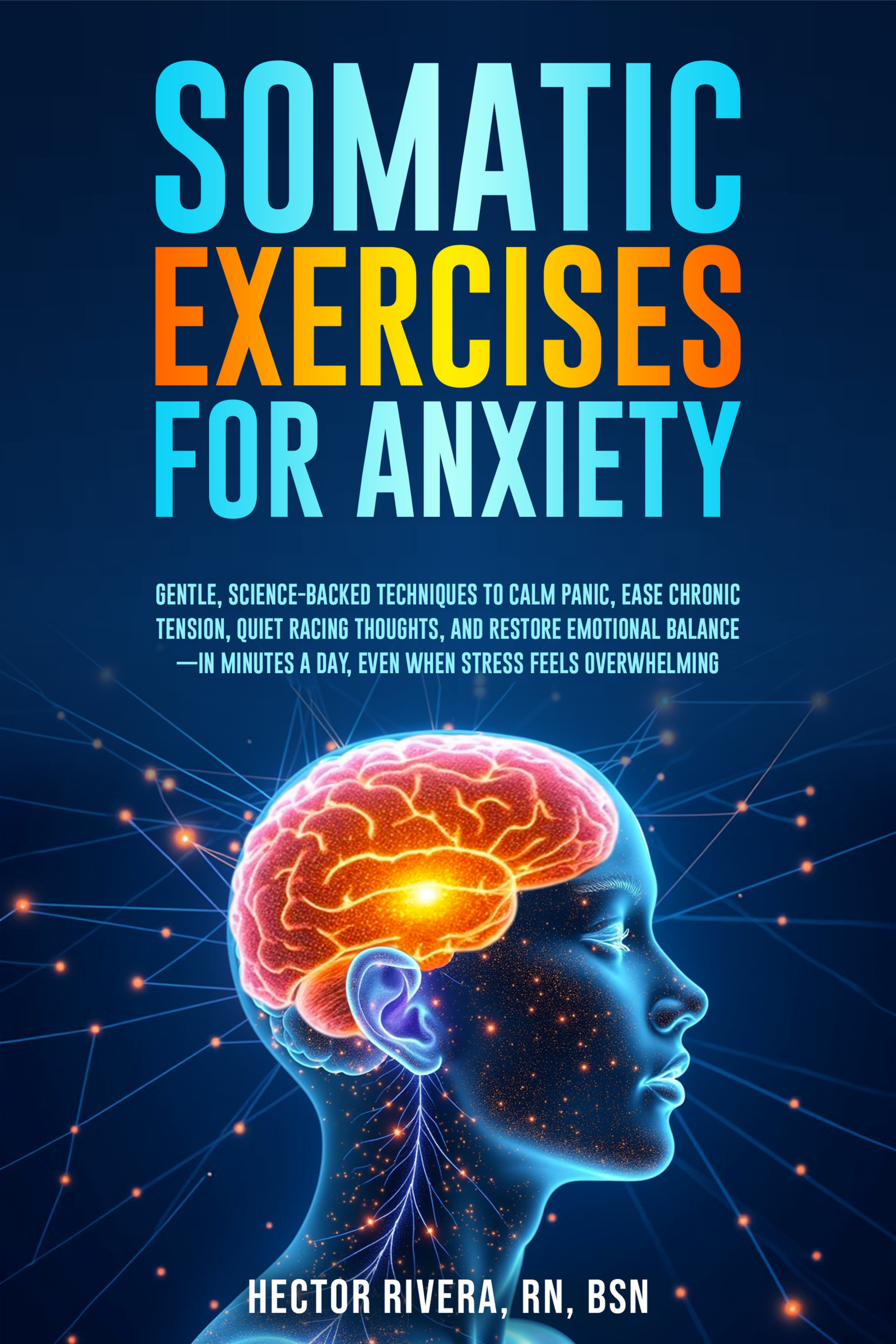
Practical body-based exercises to recognize anxiety signals, reduce physical tension, support emotional regulation, and respond to stress with greater steadiness and awareness.
Anxiety does not only appear through thoughts. It may also show up through shallow breathing, muscle tension, restlessness, a racing heartbeat, difficulty concentrating, stomach discomfort, or a persistent sense of being on alert.
Somatic Exercises for Anxiety offers practical, body-based techniques that help readers become more aware of these physical signals and respond to them with greater care. The exercises are designed to be approachable, easy to understand, and adaptable to everyday life.
Rather than asking readers to ignore anxiety or force themselves to relax, the book encourages a gradual process of orientation, grounding, breathing, movement, self-touch, and body awareness. These practices can help create space between the first signs of anxiety and the automatic reactions that may follow.
Reconnect with the present through the feet, chair, room, movement, and surrounding environment.
Use comfortable breathing practices without forcing deep breaths or creating additional pressure.
Explore slow movements and body awareness for the jaw, neck, shoulders, hands, chest, and other areas that may hold stress.
Practice looking, listening, and reconnecting with the current environment when anxiety narrows attention.
Develop simple ways to pause, identify internal reactions, and respond with greater steadiness.
Build short, realistic routines that can be used at home, before sleep, during breaks, or in difficult moments.
The exercises in this book are not intended to eliminate every anxious thought or difficult sensation. Their purpose is to help readers develop greater awareness of the body and practice responses that may support regulation, steadiness, and recovery from everyday stress.
Readers are encouraged to move slowly, remain within a pain-free range, pause when needed, and choose only the practices that feel manageable. Even a brief moment of grounding or orientation can be a meaningful place to begin.
Hector Rivera, RN, BSN, is a registered nurse with nearly thirty years of experience caring for patients facing a wide range of physical and emotional challenges. His books combine practical healthcare knowledge with accessible body-based exercises designed to help readers better understand stress, body signals, and nervous system regulation.
His writing emphasizes clear instructions, compassionate language, and practical techniques that readers can explore at their own pace.
This book is intended for educational and informational purposes only. It does not provide individualized medical, psychological, or psychiatric advice and is not a replacement for professional care. Stop any exercise that causes pain, dizziness, or significant distress, and consult a qualified healthcare professional when appropriate.